
Does Social Media Actually Make Us Better Readers?
Inspired by a recent piece in The New Yorker, here’s why reading posts isn’t the same as reading books.
I just read an article in The New Yorker where the author, Jay Caspian Kang, describes how he was able to make a small but impactful change in his life—if only for a moment. He mentions a book deadline as the reason for quitting social media, starting by deleting the apps from his phone. This small change allowed him to finish a draft of his book on time. That’s a good first step when trying to reduce the use of social media. Good for him.
Kang goes on to explain that although quitting social media helped him reclaim some hours in his day, he ultimately didn’t read more books. He then discusses the benefits of reading in general and also highlights the decline in the number of people who regularly read books. A quote from the article notes:
“In a recent National Literacy Trust survey of seventy-six thousand children, aged eight to eighteen, only one in five said they read something daily in their free time, a historically low mark for the survey. In a National Endowment for the Arts poll conducted in 2022, the number of adults who said they had read at least one book in the past year dipped below fifty per cent, down roughly ten per cent from a decade before.”
I think this is accurate: fewer people are reading books than before. But this is where I disagree with Kang—reading words on social media does not replace the act of reading a book, especially with the increase of internet "slop", both human- and AI-generated. We can’t pretend that all reading is equal. If you’re scrolling through a social media app, reacting to posts, your brain is doing something fundamentally different than when you’re reading a book. Kang suggests that internet reading is still reading, but to me that sounds more of an excuse to not pick a book.
I, for instance, feel sick after spending any meaningful amount of time watching TikTok or reading Twitter. It’s toxic, and although you can try to curate a decent feed, the truth is that highly engaging content—often pure trash—spreads widely on social media. As cognitive scientist Maryanne Wolf explains, screen-based reading encourages skimming rather than deep, reflective reading, risking the deterioration of what she calls the “reading brain,” with negative consequences for empathy, critical thinking, and comprehension (Wolf, 2018).
Does this mean the internet is bad? Of course not. The internet—and more specifically social media—has a place in our modern society. The problem is that the companies behind these platforms incentivize the wrong behaviors to increase engagement and, in turn, profit. AI also plays a role when it’s used to generate more low-quality content, or “AI slop,” as it’s increasingly called. I think both things are true: the amount of internet slop has increased (and will continue to rise) thanks to AI, but good, supportive online communities also exist—and I hope they continue to thrive.
So how does this relate to The New Yorker article and reading? Kang argues that while the internet might cause people to read less, it could also make them read smarter. He points to communities like BookTok and Reddit, where people recommend books that might otherwise be overlooked, improving reading culture by helping people discover titles aligned with their interests.
While that may be the experience for some, in my opinion it creates an echo chamber where the same few books are repeatedly recommended by influencers—often without even reading them—just to appear unique and gain views or popularity. Is that how you want to discover books? I don’t.
Indeed, a recent study found that social-media algorithms behind BookTok, Bookstagram, and BookTube frequently push trending books and authors while failing to highlight diverse or lesser-known works, limiting real discovery (Whitley, 2025). More broadly, this is a classic example of the "filter bubble"—a term coined by Eli Pariser—where algorithmic curation narrows our exposure rather than broadening it, trapping us in a loop of our own preferences.
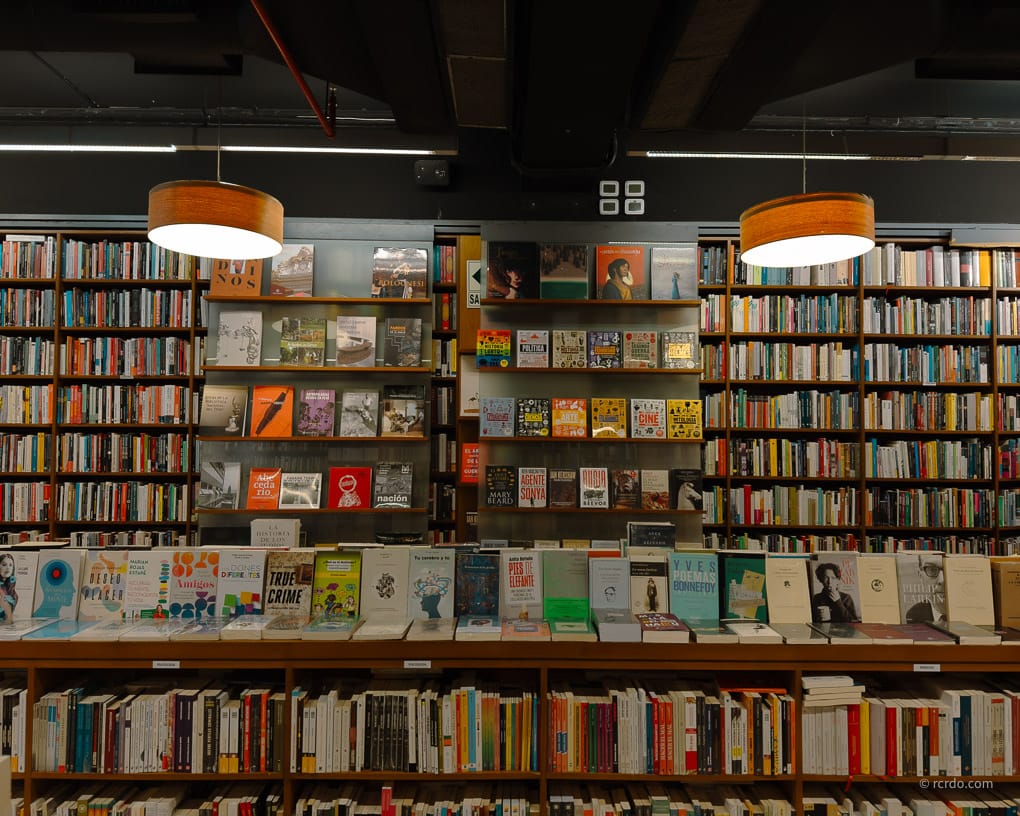
If you’re a reader, then you know the joy of browsing a bookstore or library and discover classics, contemporary novels, and books on any topic you might be curious about. In fact, I’d argue that by doing this, you are naturally exposed to far more options, especially since books in physical spaces are usually organized by theme or topic. The same applies to online bookstores, where similar titles are grouped and suggested.
So, does social media make you a better reader? A more optimized one, someone who might read fewer books but find what they're looking for more quickly? My answer is no. If you spend any substantial amount of your day browsing social media, I'd bet you won’t have much time left to read—or to do much of anything else. So over time, the enjoyment of reading may fade, as your brain becomes addicted on the dopamine rush that comes from likes, comments, and other forms of instant gratification.
Returning to the beginning of the article, the author mentions how he hoped to read more books after quitting social media. Later in the piece, he writes:
“It is, for instance, much easier to find information now—information we might once have looked for in books, say, and also information about the books we might consider reading. Maybe, in the age of the internet, many of us, as informed readers, only want to read one book, tailored very specifically to our interests, every couple of years.”
Do you see what’s going on? I don’t disagree that it’s now much easier and more efficient to find the information we need online. However, readers don’t read just to find information—or at least, that’s not the only or the main reason people read books. There’s no mention of reading for the joy of it. And that, to me, is the clearest sign he doesn't understand it—because if he did, he’d be making time for it.
The article fails to recognize that reading isn’t just about gathering information. It’s about enjoyment. It’s about exploring new ideas, new worlds, and new perspectives. Not everything we do needs to be efficient. In fact, slowing down and savoring moments—whether eating, walking, traveling, or reading—is what makes life rich and meaningful.
If you want to push back against the efficiency mindset, here’s my advice: find books on topics you’re genuinely interested in. Read fiction. Don’t limit yourself to the non-fiction aisle, otherwise, every book might start to feel like homework. And that's exactly the feeling you want to avoid if you are trying to read more books.