
I Built It. Nobody Came.
I shipped a real product. It works. I use it every day. And when I launched it to the world, the world didn't notice.
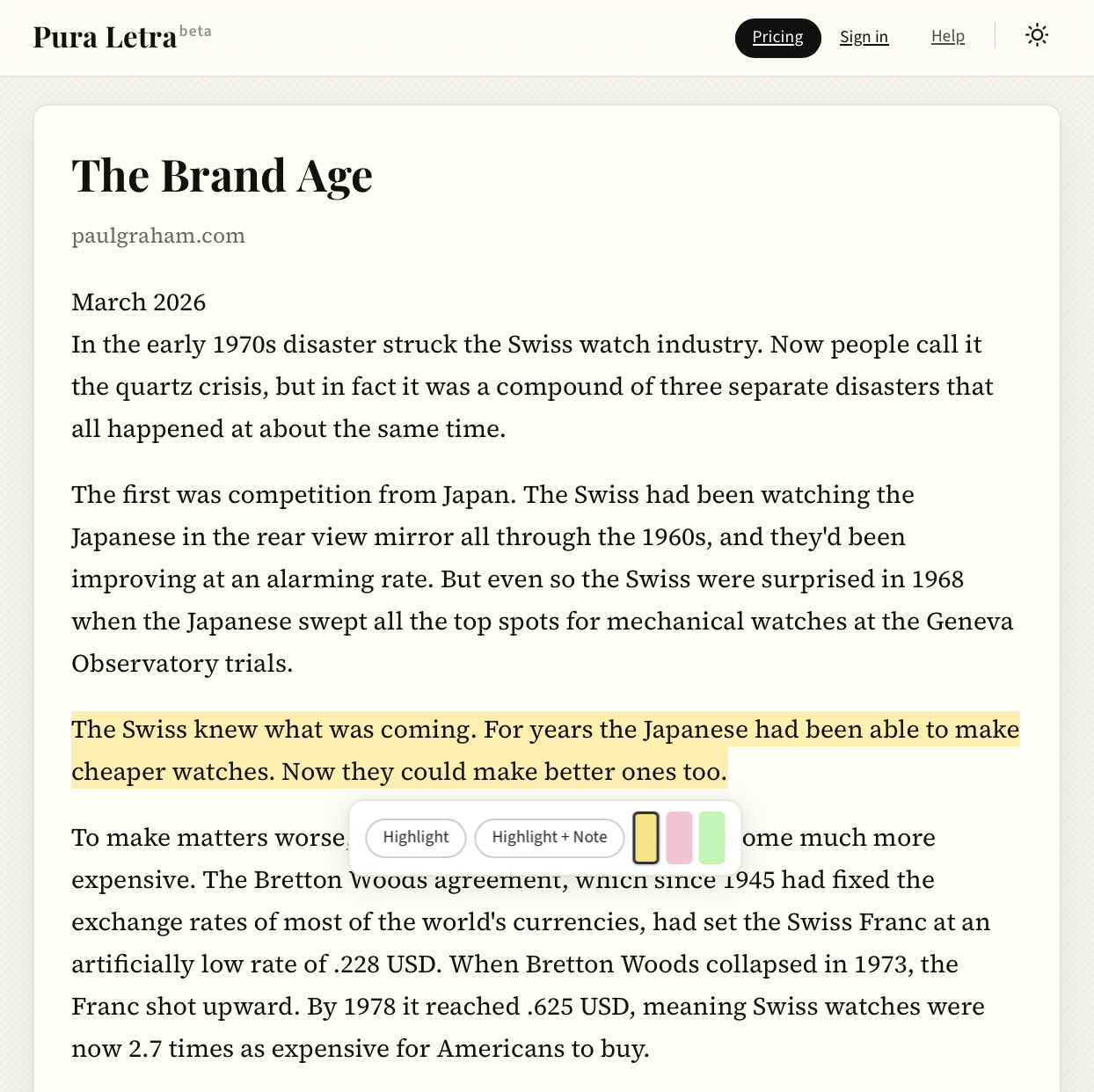
I have been reading online for as long as there has been something to read online. Technical blogs, essays, long-form journalism, fiction when I can find it. Before smartphones, before RSS readers, before social media decided what was worth your attention. Reading is one of those constants in my life that survived every job change, every move, every technology shift I wrote about a few weeks ago.
For years, my system was simple. I would find an article, save it to Pocket, and read it later in a clean, quiet layout. No ads, no banners, no autoplay videos. Just the text. Pocket was not a fancy tool. It did one thing and it did it well, and I used it almost every day for years.
Then Pocket announced it was shutting down.
I went looking for alternatives. I tried a few. None of them felt right. They were either bloated with features I didn't want, or they stripped out things I needed, or they looked like they were designed by someone who had never sat down and read a long article for pleasure.
So last September, I opened Claude Code and started building my own.
The app is called PuraLetra. The name is Spanish for "pure letter" or "pure text," which is exactly what it does. You paste an article URL, and it gives you the text in a clean layout with good typography. No ads, no clutter, no cookie walls, no invasive tracking. I use Plausible instead of Google Analytics because an app about clean reading shouldn't be watching you while you read. Just the writing.
I built it over evenings and weekends across about six months. Claude Code did the heavy lifting on implementation. I made the decisions about what it should do, how it should look, what mattered and what didn't. This is the dynamic I described in my essay about AI being the fourth technology shift. A solo builder with decades of experience and an AI tool that handles the implementation speed. The window I said was opening? I climbed through it.
As I used PuraLetra, I kept adding things I actually needed. I started highlighting passages I wanted to come back to, color-coding them by why they mattered. I tagged articles by topic so I could find that piece about database migrations six months later without scrolling through everything. I added a Chrome and Safari extension so saving an article was one click instead of a copy-paste. Dark mode, because I read at night.
Two features surprised me by becoming my favorites. The first is the reader digest, a weekly email that tells me what I have saved but haven't read yet. It is a small thing, but it turned PuraLetra from a tool I saved things to into a tool that reminded me to actually read them. The second is translation to Spanish. I am a native Spanish speaker, and being able to read articles in Spanish when I want to is something no other reading app ever gave me without friction. This feature is not yet available to the public, I am still dogfooding it but will release it soon.
I built all of this because I needed it. And it works. I use PuraLetra every single day.
In March, I launched PuraLetra on Product Hunt.
I had done the preparation. I wrote the maker comment. I designed the promotional images. I drafted posts for LinkedIn, Threads, and X. I picked the launch day, set the alarm, and posted at 12:01 AM Pacific.
Then I watched.
No upvotes. No signups. No traffic. The Product Hunt page sat there like a storefront on a street nobody walks down. I refreshed the analytics a few times, then a few more, then I stopped refreshing because the number wasn't going to change by looking at it harder. My family gracefully upvoted it and signed up for it, but no one else did.
I have a handful of free accounts, mostly from people I know. No paying subscribers.
Here is the part where, if I were writing a different kind of newsletter, I would tell you what I learned. I would package the failure into a framework. Five things I'd do differently. How to launch on Product Hunt the right way. A redemption arc where the failure becomes the setup for a smarter second act.
I don't have that. Not yet.
What I have is a product I built with my own hands and an AI tool, that solves a real problem I actually have, that I use every single day, and that I haven't figured out how to get in front of the people who might need it too.
That is a strange place to sit. It is not the same as the projects in my graveyard, the ones I wrote about in essay two. Those I abandoned before they were real. PuraLetra is real. It works. The code runs. The weekly digest lands in my inbox every Tuesday. The articles are clean and readable. The highlights are there when I go back to them.
I built the thing. The thing is good. And the market said nothing.
I keep coming back to something. In the first essay I wrote for this series, I said the only thing I had been consistent at for years was writing. PuraLetra might be the second. I have used it every day since September. I am not tired of it. I am not looking for the next idea. I am still adding features because I keep finding things I want it to do.
Maybe that is worth something, even if the Product Hunt launch says otherwise. Maybe the product that survives is the one you build because you need it, not because a launch strategy told you to.
I don't know yet. I will let you know when I do.
If you want to try it, it is at puraletra.com. It is free. You don't need to upvote anything.
This is essay six of Building My Way Out, a weekly series about one engineer's attempt to build a life beyond employment.